The Global Stage for the "Influencer Olympics"

For iconic moments such as Coachella, brands understand that the moment doesn't begin at the venue, it begins at the airport.
Coachella has evolved into the "Influencer Olympics" attracting 125,000 daily attendees and thousands of brand-sponsored creators. Influencer marketing is continuing to propel massive events such as Coachella, with up to 86% of US marketers planning to partner with influencers this year. This environment offers a direct pipeline to Gen Z, who accounted for 17% of global consumer spending in 2024 and now command a market where 94% of the demographic trusts influencers over traditional ads. The scale of this opportunity is reflected in the numbers; Coachella 2026 sold out in a record three days, and in 2025 alone, creator-led festival content generated $754 million in earned media value according to AdAge. With the global influencer marketing industry on track to exceed $40 billion in 2026, brands are investing tens of millions in VIP experiences to capture this audience. Airport Out-of-Home advertising allows brands to intercept this high-value demographic at the very start of their festival experience.
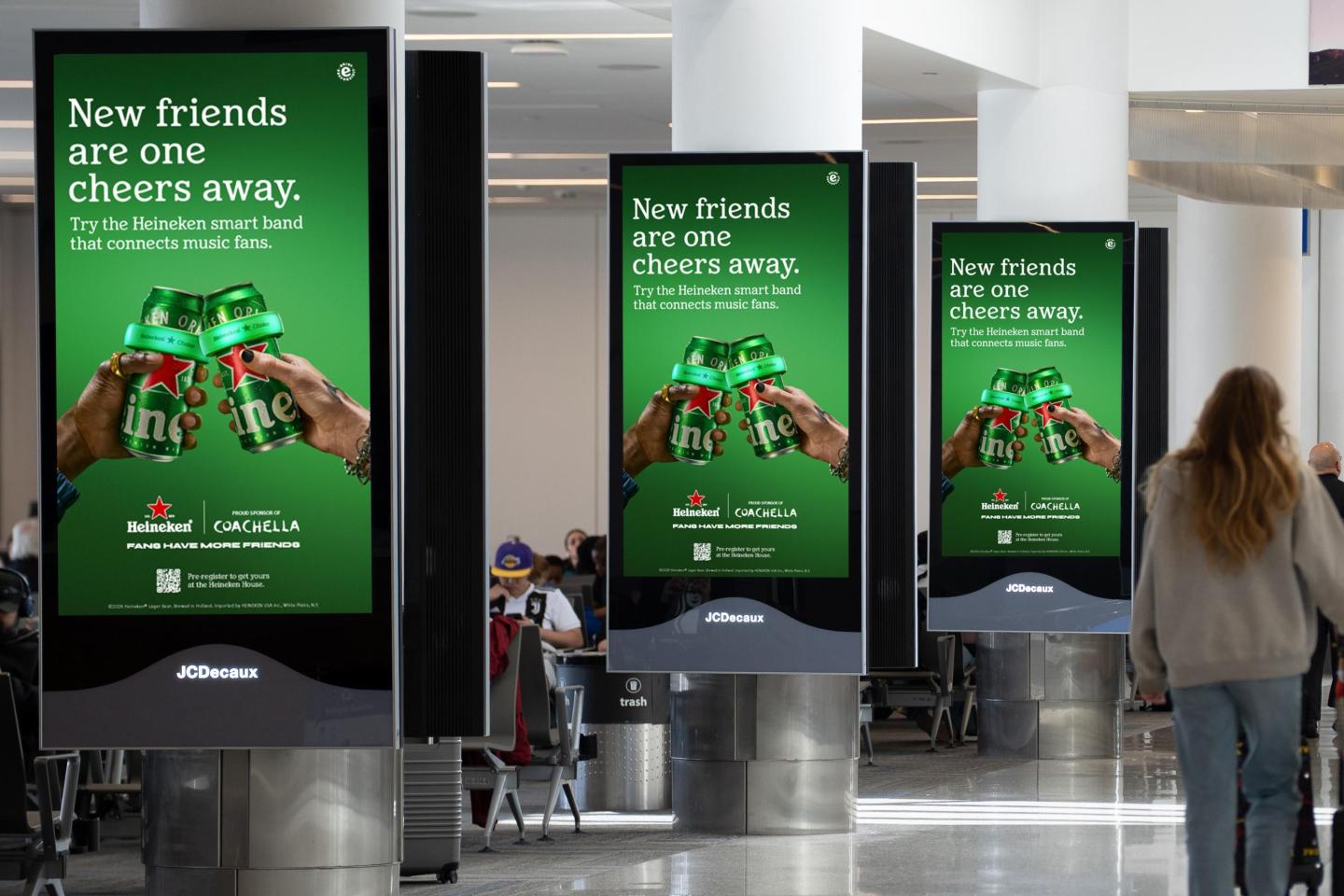
Heineken, a Coachella partner for 23 years, consistently utilizes JCDecaux inventory at LAX to drive brand recall. This year, the brand used airport OOH to support its "Clinker" activation, which used smart devices to encourage real-world social interaction. The “Clinker” is a smart band that wraps around Heineken cans and glasses, transforming every cheers into an opportunity for festival connection among users. By deploying creative across digital and static displays at the entertainment capital's primary hub, Heineken leverages the fact that OOH media maintains the highest consumer recall rate at 86%—outperforming radio, podcasts, online ads, and TV streaming. This strategy ensures that the brand is established as a primary fixture of the festival experience before attendees even reach the desert. Heinekens campaign at LAX poses as a gold standard example for brands activating at global events and further emphasizes that activations truly begin at the airport.
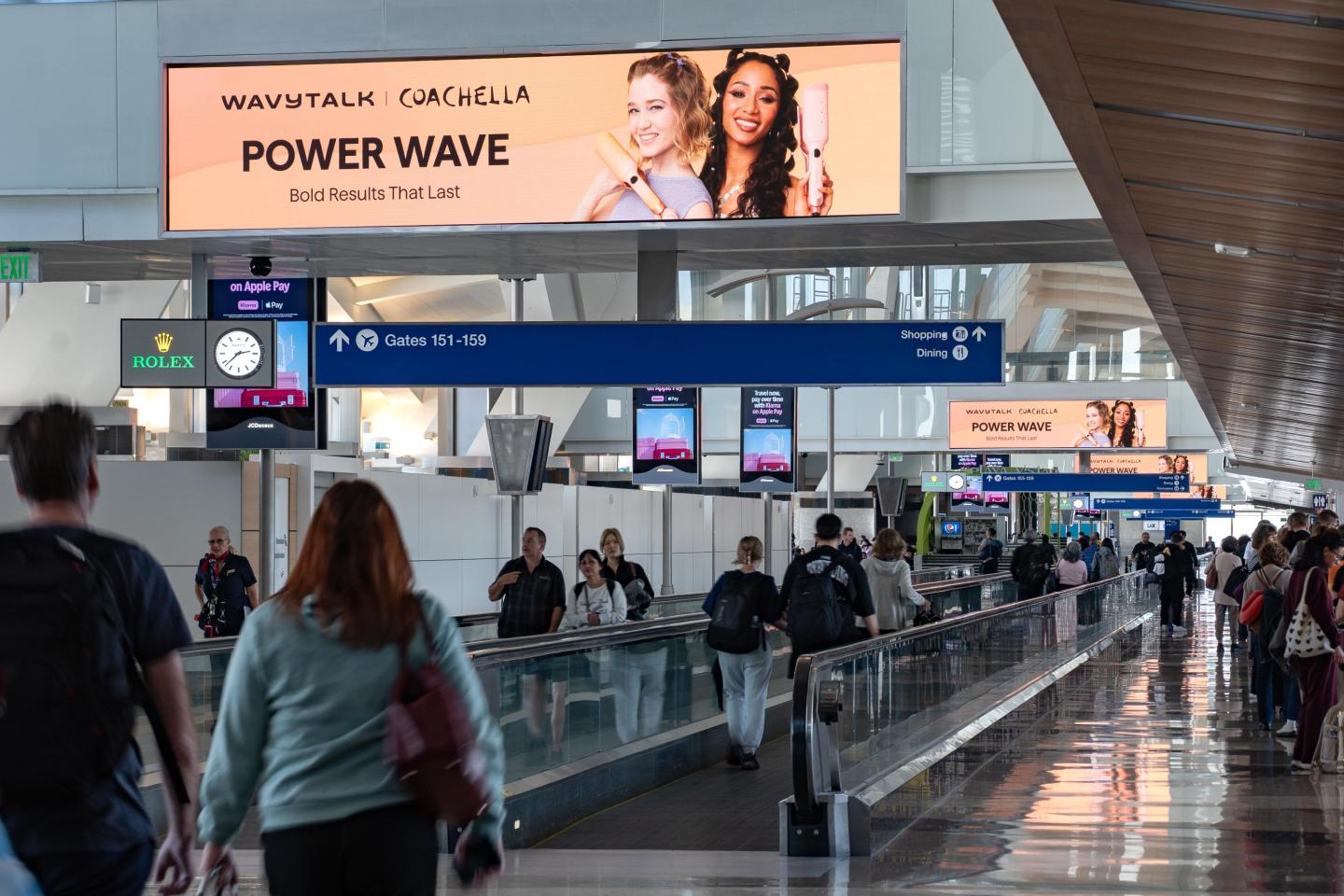
LAX serves as a critical touchpoint for domestic and international festival-goers, with Terminal B seeing a staggering 1.5 million monthly passengers. Brands like WavyTalk and Hugel Florent have capitalized on this massive traffic by securing placements in high-density areas. Hugel Florent, a first-time JCDecaux advertiser, specifically targeted Terminals 7 and 8 via the 20-screen Prestige Digital Network, capturing the influx of travelers from United Airlines, the airport’s second-largest carrier. With WavyTalk displaying their hair models throughout the terminal and on socials, they are seamlessly priming their audience with Coachella already top-of-mind. This is a data-driven move as 69% of consumers are more likely to engage with ads relevant to their current environment or activity according to YouGov. As travelers use their transit time to plan outfits and view festival content, JCDecaux’s digital network allows brands to integrate directly into the Coachella narrative at a moment of peak consumer receptivity.
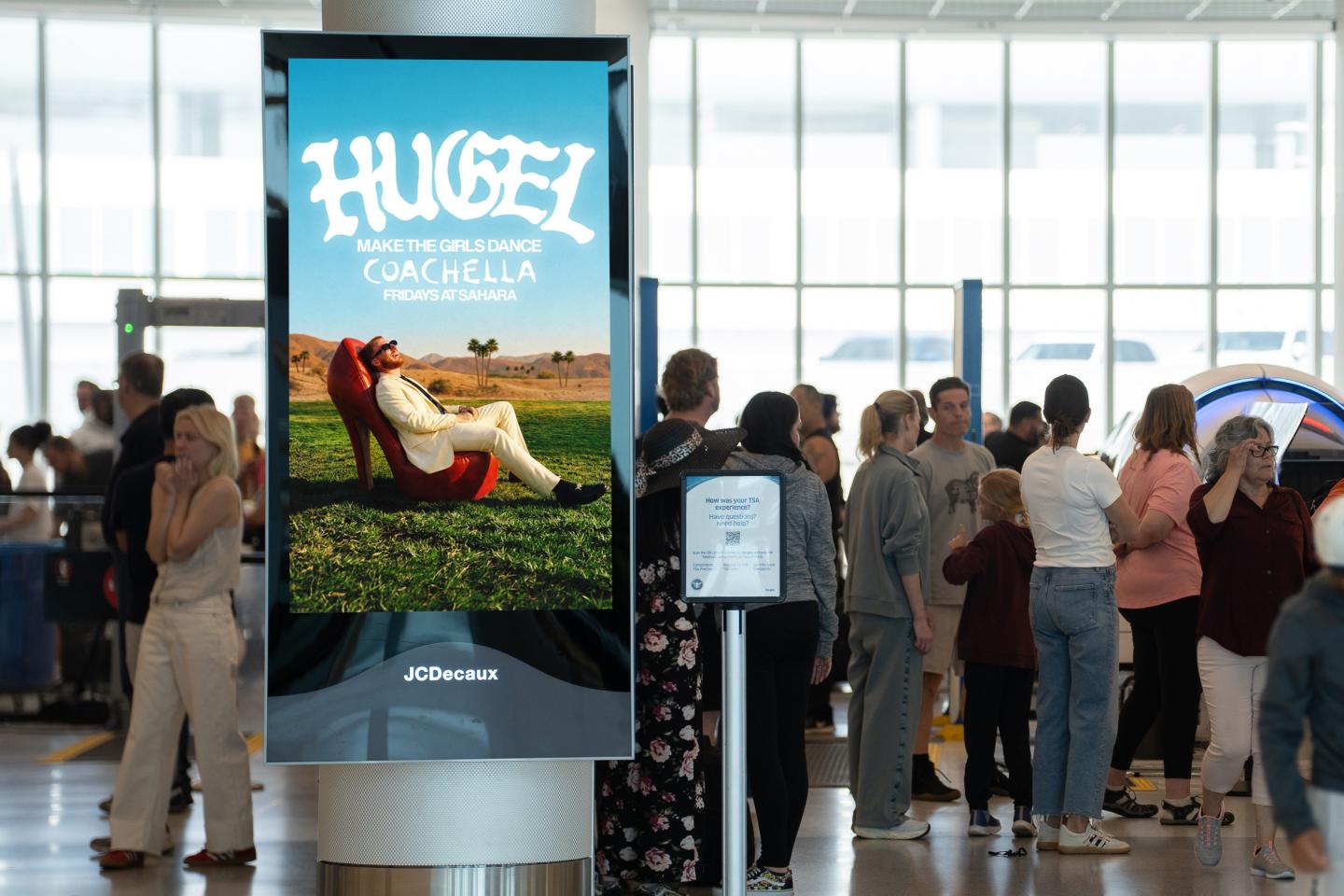
The opportunity for festival-aligned OOH extends far beyond the California desert. Throughout 2026, JCDecaux’s premiere airport markets such as: LAX, ORD, MIA, and DFW, will serve as the primary gateways for a dense calendar of major events. From Stagecoach and CORE Los Angeles to The Governors Ball in New York, Lollapalooza in Chicago, and Ultra in Miami, the influx of high-spending travelers is constant. With the US music festival market projected to grow to $3.55 billion this year, these transit hubs represent a concentrated environment of "liquid audiences,” which is an audience that positively adapts to convenient and personalized content in various formats. By securing a presence across JCDecaux’s national airport network, brands can scale their Coachella and music festival success into a year-long strategy, owning the first and last impression of the millions of travelers who define today's creator economy.